Published October 27, 2026
Fireplace Cleaning in Baldwin, NY: What You Can Do Yourself and When to Call a Pro
Homeowners in Baldwin, NY, can handle basic fireplace maintenance, but thorough fireplace cleaning involves more than removing ash from the hearth. Creosote, soot, and debris can accumulate inside the flue, smoke shelf, and other areas that are difficult to inspect from the firebox. A professional chimney sweep can assess these areas and determine whether cleaning or repairs are needed. Understanding which tasks are safe to handle yourself and which require professional equipment can help you maintain your fireplace before the next heating season.
Can You Clean Your Own Fireplace, or Do You Need a Professional?
Quick answer: You can remove completely cooled ash and perform basic visual checks, but chimney cleaning and inspection require more specialized knowledge and equipment.
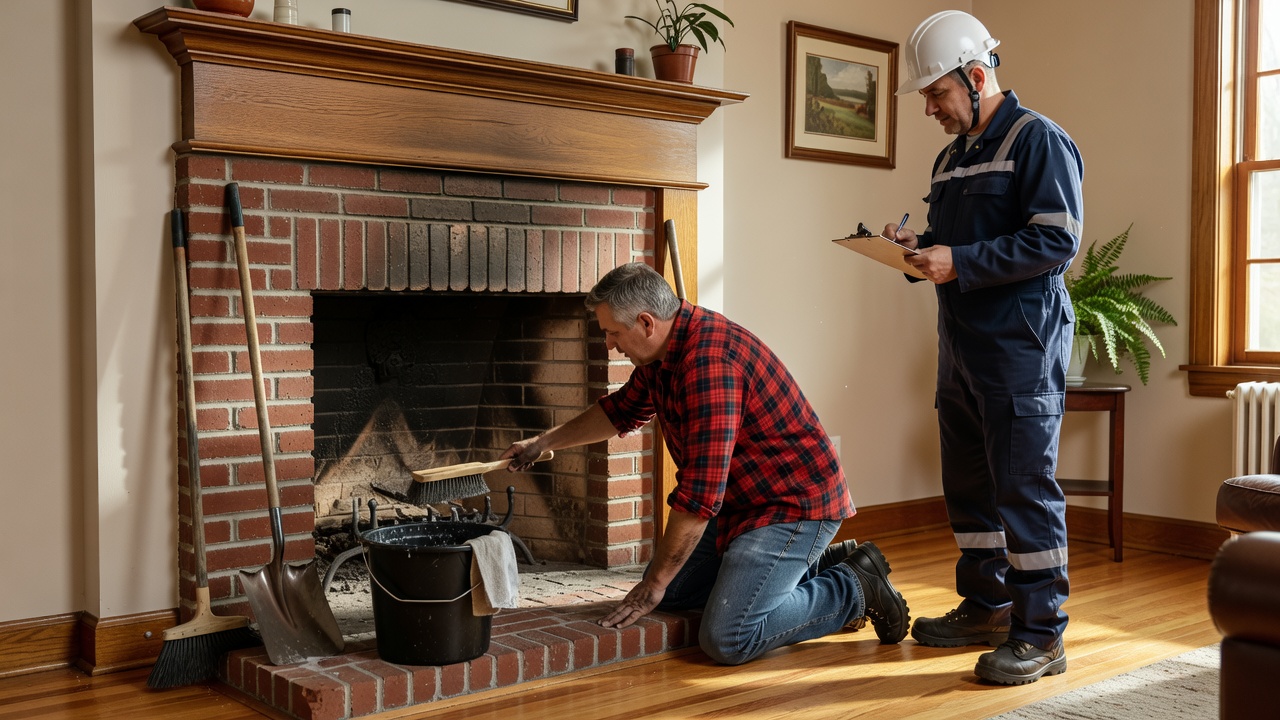
After a fire has gone out, homeowners can remove cooled ash using a metal container and a small hand broom. Ash can retain heat for an extended period, so do not assume it is safe simply because the fireplace looks cold. Avoid using an ordinary household or shop vacuum to collect ash unless the equipment is specifically designed and rated for that purpose.
Basic housekeeping does not remove creosote from the full length of the flue or reveal hidden damage to the liner. The Chimney Safety Institute of America (CSIA), following NFPA 211 guidance, recommends having chimneys, fireplaces, and vents inspected at least once a year. Cleaning and repairs should be performed when necessary, based on the findings.
What Is Creosote, and Why Does It Matter for Baldwin Homeowners?
Quick answer: Creosote is a combustible deposit that forms during wood combustion and can increase the risk of a chimney fire when it accumulates.
When wood burns, combustion byproducts can condense on cooler surfaces inside the flue. The resulting deposits vary in consistency, from loose material to hard, glazed buildup. Their formation depends on factors such as wood moisture, burning practices, and chimney draft.
A smoky or tar-like odor, dark staining, or visible soot may warrant further investigation, but none of these signs alone confirms the amount or condition of creosote inside the flue. A professional inspection helps determine whether cleaning is needed and whether other problems may be present.
Homeowners should not assume that an older chimney is unsafe simply because of its age. The actual condition of the chimney, the amount of use, and the inspection findings are more useful indicators.
What Does Professional Fireplace Cleaning Involve?
Quick answer: Depending on the system and its condition, professional service may include removing deposits from the flue, cleaning accessible areas, and inspecting the fireplace and chimney components.
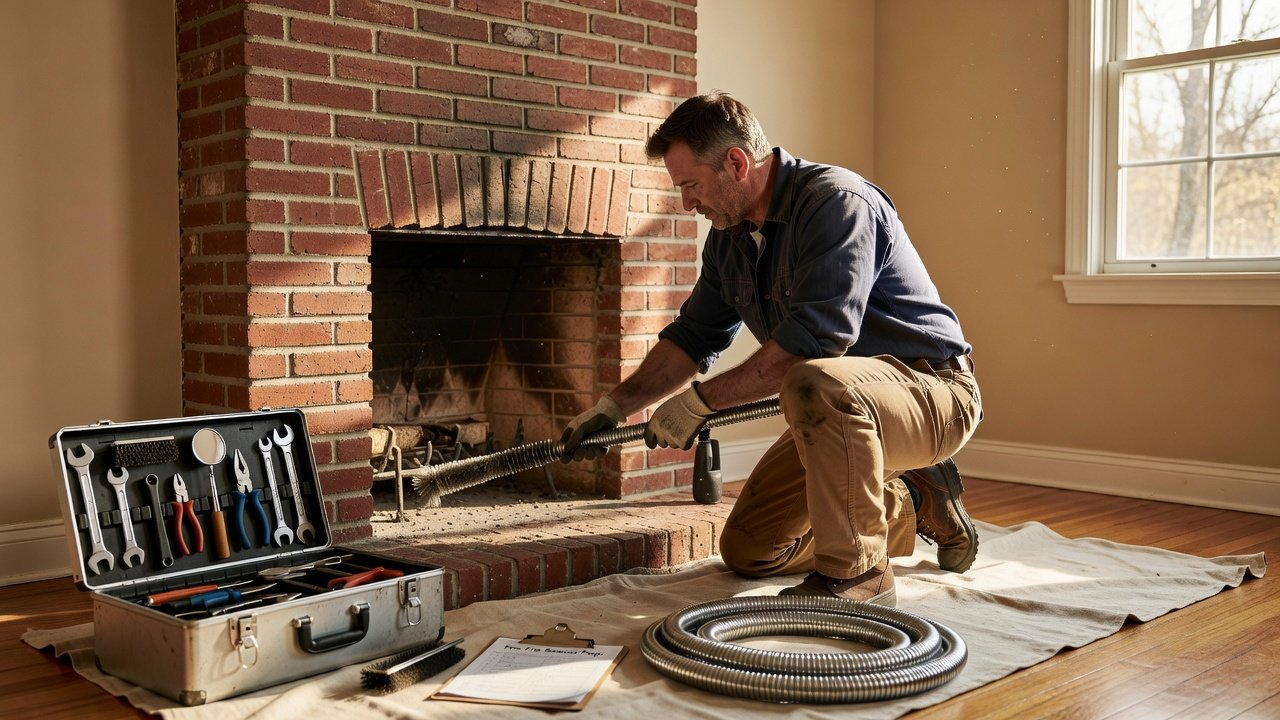
A chimney sweep may use appropriately sized brushes and specialized vacuum equipment to remove soot, creosote, and debris. The smoke shelf, smoke chamber, firebox, and damper area may also need attention, depending on the system and the service included.
Cleaning and inspection are related but different tasks. Cleaning removes deposits and obstructions. An inspection evaluates the condition of accessible components and identifies problems that may require further investigation.
A Level 2 inspection is more detailed than a routine Level 1 inspection and includes an internal examination of the flue, typically using video scanning. It may be appropriate after a chimney fire, a change to the appliance or fuel, a property transfer, or suspected damage. It is not automatically required for every standard cleaning.
If a carbon monoxide alarm sounds or you suspect combustion gases are entering your home, leave immediately with everyone in the household and call 911 from a safe location. Do not re-enter until emergency responders say it is safe.
How Often Should a Fireplace in Baldwin Be Cleaned?
Quick answer: Have the chimney inspected at least annually. Clean it when the inspection shows that cleaning is necessary.
The appropriate cleaning schedule depends on how often you use the fireplace, the amount and condition of deposits, and the type of appliance. A fireplace used regularly throughout winter may accumulate more deposits than one used occasionally, but frequency alone does not determine whether cleaning is required.
Scheduling an inspection before the heating season can give you time to arrange any necessary cleaning or repairs before regular use. If you have recently moved into a home and do not know when the chimney was last inspected, arrange an assessment before lighting the first fire.
What Can You Handle Yourself Between Professional Visits?
Quick answer: Basic housekeeping and visual checks are reasonable, provided you follow appropriate safety precautions.
Between professional inspections, homeowners can:
-
Remove ash only after it has completely cooled, using a metal container.
-
Keep combustible items away from the fireplace opening.
-
Check that the damper moves properly when the fireplace is cold.
-
Look for new visible cracks or deteriorating material in the firebox.
-
Watch for new staining or signs of moisture around the fireplace and exterior masonry.
-
Keep the area around the hearth clear.
Do not climb onto the roof, reach into inaccessible chimney areas, or attempt to brush the flue without suitable equipment and training. Avoid disturbing suspected creosote deposits or damaged liner material. If you notice a concerning condition, arrange a professional inspection rather than trying to diagnose it yourself.
What Warning Signs Mean You Should Stop Using the Fireplace?
Quick answer: Suspected liner damage, repeated smoke entering the room, or signs of a possible chimney fire require prompt attention.
Contact a qualified chimney professional if you notice:
-
A persistent smoky or tar-like odor when the fireplace is not in use.
-
New or widening cracks in the firebox.
-
Visible damage to the chimney or flue components.
-
Smoke repeatedly entering the room during use.
-
New soot staining around the fireplace opening.
-
Signs of moisture intrusion or deteriorating masonry.
These symptoms can have different causes. For example, smoke entering the room may relate to an obstruction, a damper problem, draft conditions, or another issue with the system. A professional assessment is needed to determine the cause.
If a chimney fire is suspected, stop using the fireplace, evacuate if a fire may be occurring, and call 911. If you suspect carbon monoxide exposure, leave the home immediately and contact emergency services from outside.
How Much Does Fireplace Cleaning Cost in Baldwin, NY?
Quick answer: Costs vary depending on the fireplace type, the scope of cleaning, chimney condition, and whether additional inspection or repair work is needed.
For budgeting, some local service listings advertise standard wood-burning chimney cleaning in the general range of $150 to $350. This is an illustrative estimate rather than a verified average for every Baldwin home. Actual quotes may fall outside that range depending on the work involved.
The final cost may depend on:
-
The amount and condition of creosote or soot.
-
Chimney height and accessibility.
-
Whether the service includes the flue, smoke chamber, and other areas.
-
Whether a more detailed inspection is appropriate.
-
Whether the contractor identifies a need for repairs.
Ask for a written estimate that explains exactly what is included. A firebox-only cleaning is not the same as cleaning the full chimney system. Confirm whether inspection, debris removal, and cleanup are included before authorizing the work.
What Is the Difference Between a Chimney Inspection and Cleaning?
Quick answer: Cleaning removes deposits, while an inspection evaluates the chimney’s condition. Depending on the findings, you may need one or both services.
A Level 1 inspection generally covers accessible portions of the chimney and connected appliance. A Level 2 inspection involves a more detailed assessment, including an internal flue examination using video scanning or similar equipment. A Level 3 inspection may require access to concealed areas or removal of components when a serious concern cannot be evaluated adequately through a less invasive inspection.
An inspection can identify conditions that cleaning alone will not resolve, such as damaged masonry or a deteriorated liner. The appropriate inspection level depends on the circumstances and the system’s history.
When booking service, ask which inspection level is included and whether any additional assessment would cost extra.
Can You Use Your Fireplace Without Cleaning It First?
Quick answer: If you do not know the chimney’s current condition, arrange an inspection before using the fireplace.
This is particularly important if you have moved into a home without maintenance records, noticed signs of damage, or experienced a chimney fire. A chimney may contain debris, animal nesting material, creosote deposits, or hidden damage that is not visible from the firebox.
Do not rely on a quick look inside the fireplace to decide whether the entire system is safe. A qualified professional can inspect the accessible components and recommend cleaning or further evaluation when necessary.
Does the Type of Wood Affect Creosote Buildup?
Quick answer: Yes. Moisture content and burning practices can affect how much smoke and combustion residue a wood fire produces.
The U.S. Environmental Protection Agency recommends burning dry, seasoned wood with a moisture content of 20 percent or less. A moisture meter can help you check whether firewood is ready to burn. Dry wood generally burns more efficiently and produces less smoke than wet or unseasoned wood.
Using dry wood can help reduce deposits, but it does not eliminate the need for annual chimney inspection. Whether cleaning is required still depends on the actual condition of the system.
DIY vs. Professional Fireplace Cleaning
| Task | Recommended approach | Important note |
|---|---|---|
| Removing completely cooled ash | DIY | Use a metal container and handle ash carefully |
| Basic visual check of the firebox | DIY | Arrange professional assessment for concerning damage |
| Checking damper movement | DIY | Check only when the fireplace is cold |
| Cleaning the full flue | Professional | Requires appropriate equipment and technique |
| Cleaning inaccessible smoke chamber areas | Professional | Access and debris control may be difficult |
| Inspecting for hidden liner damage | Professional | A more detailed inspection may be needed |
| Determining whether creosote needs removal | Professional assessment | Deposits and their condition may not be visible from the firebox |
| Suspected chimney fire or carbon monoxide emergency | Emergency services | Evacuate and call 911 from a safe location |
Schedule Fireplace Cleaning in Baldwin, NY
If your fireplace has not been inspected in the past year, or you are unsure of its maintenance history, arrange an inspection before regular use. A professional can assess the chimney’s condition and determine whether cleaning or repairs are needed.
Ridgewood Chimney is named in the original business information as a provider serving Baldwin and nearby communities. Before publishing a service offer, confirm the company’s current service area, qualifications, and whether it actually provides free inspections.
Ask for a clear explanation of the work included, the inspection level, and any additional charges before booking. Understanding the condition of your fireplace and chimney can help you make informed decisions about maintenance before the heating season begins.
Related from Baldwin Chimney: Creosote Removal in Baldwin, NY Before One Cold Night Becomes a Crisis
Our services
Creosote Removal in Baldwin, NY Before One Cold Night Bec… · Chimney Cleaning in Baldwin, NY · Professional Chimney Repair in Baldwin, NY · Chimney Repair in Rockville Centre · Chimney Sweep in Baldwin Harbor · Chimney Cap Replacement, Liners & Dampers in Baldwin, NY
Areas we serve
Baldwin, NY · Dryer Vent Cleaning Baldwin, NY · Baldwin, NY · All areas →