Published November 4, 2026
Chimney Sweep in Baldwin, NY: Picking the Right Contractor at the Right Time of Year
Baldwin sits on Long Island’s South Shore, where homeowners deal with humid summers, cold winters, and changing weather throughout the year. These conditions can affect chimney masonry, flashing, dampers, and other components over time. Creosote and debris can also accumulate inside the flue whenever a fireplace or wood-burning appliance is used.
That makes regular chimney maintenance important. Choosing when to schedule a chimney sweep can help you avoid the fall rush, address problems before the next heating season, and give yourself enough time to arrange repairs if the inspection uncovers damage.
Why the Calendar Matters for Baldwin Homeowners
The National Fire Protection Association (NFPA) recommends that chimneys, fireplaces, and vents be inspected at least once a year. Cleaning, maintenance, and repairs should be performed when necessary. The Chimney Safety Institute of America (CSIA) follows the same annual inspection guidance.
Neither organization requires homeowners to schedule an inspection in a particular month. However, spring and summer can be convenient times to arrange service because you have more time to address problems before colder weather arrives.
Waiting until the first cold spell can make scheduling more difficult. Many homeowners begin looking for chimney services as soon as they plan to use their fireplaces again. Booking ahead gives you more flexibility to compare contractors, review inspection findings, and arrange repairs if needed.
A Season-by-Season Breakdown
Spring (March through May)
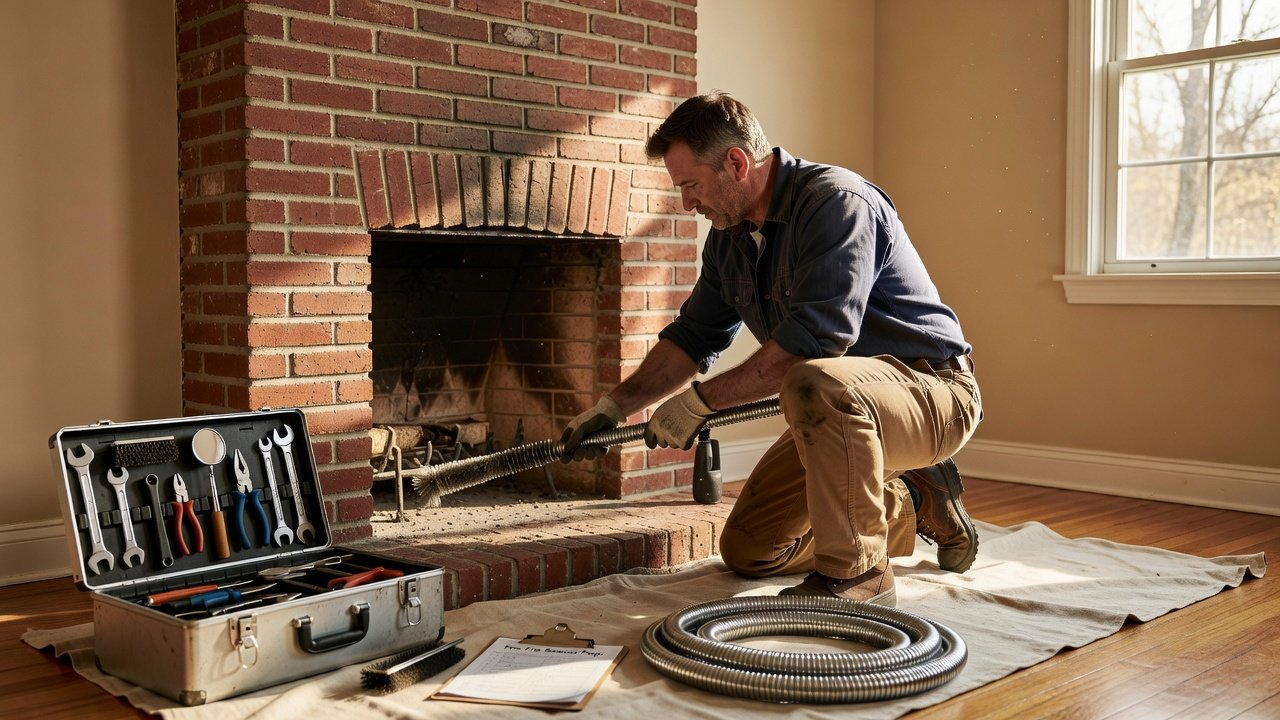
Spring is a practical time to schedule a chimney sweep after months of fireplace use. A technician can inspect the system, assess creosote buildup, and check for visible damage that may have developed during the heating season.
If repairs are needed, arranging them early gives you more time to compare estimates and plan the work. Masonry repairs may also be easier to schedule before the busy fall period.
Summer (June through August)
Summer is another good opportunity to arrange chimney maintenance. With colder weather still several months away, homeowners can address problems without rushing to prepare for immediate fireplace use.
If the inspection reveals damaged mortar, a cracked crown, deteriorating flashing, or a liner problem, you can discuss the repair options and schedule the work in advance.
Keep in mind that masonry products have specific temperature and curing requirements. A qualified contractor should determine whether weather conditions are suitable for the repair being performed.
Fall (September through October)
Fall is a popular time to schedule chimney sweeping and inspections. Homeowners want their fireplaces ready before temperatures drop, which can increase demand for appointments.
If you plan to use your fireplace regularly, try to arrange service before the busiest weeks. Waiting until October or November may limit your choice of appointment times.
If you skipped the previous year’s inspection, do not assume the chimney is safe simply because it looks clean. Have it evaluated before using it. If you notice smoke entering the room, unusual odors, or other signs of a problem, stop using the fireplace until it has been assessed.
Winter (November through March)
You can still schedule a chimney inspection or cleaning during winter. However, availability may be more limited during periods of high demand.
Cold or wet weather can also affect certain exterior repairs, particularly masonry work. If the inspection reveals damage that requires work under specific temperature or weather conditions, the contractor may recommend scheduling that repair for a more suitable period.
A winter appointment is not automatically too late. The important thing is to have the chimney assessed before continuing to use a system that may have a safety problem.
Picking the Right Chimney Sweep Contractor
Finding an available contractor is only part of the process. You also want someone who understands chimney systems, follows appropriate inspection procedures, and can explain the work clearly.
Look for CSIA certification
The Chimney Safety Institute of America offers professional certification for chimney sweeps. CSIA certification is a useful credential to look for when comparing contractors.
Ask whether the technician performing the work holds a current CSIA credential. You can also use the organization’s website to learn more about certified professionals.
Certification is a helpful starting point, but it does not replace checking the company’s insurance, licensing, experience, and customer references.
Ask about inspection levels
NFPA 211 describes three levels of chimney inspection. The appropriate level depends on the system’s condition and the reason for the inspection.
-
Level 1: Generally appropriate when the chimney and connected appliance have been used under the same conditions without relevant changes. It covers readily accessible portions of the system.
-
Level 2: A more detailed inspection that includes accessible areas and a video scan of the chimney interior. It is recommended in circumstances such as a property sale, a change in appliance or fuel, or an event that may have damaged the chimney.
-
Level 3: May be necessary when a suspected hazard cannot be fully evaluated without accessing concealed areas. This can involve removing parts of the chimney or surrounding building structure.
Ask the contractor which inspection level is appropriate for your situation and whether the inspection includes photographs or a written report.
Confirm licensing and insurance
Nassau County requires home improvement contractors performing covered residential work to obtain the appropriate county license. The county specifically lists chimney and fireplace builders, repair contractors, and cleaners among the businesses that must be licensed.
Before hiring a company, ask for its Nassau County home improvement contractor license information and verify its status with the Department of Consumer Affairs. Also request proof of liability insurance and workers’ compensation coverage where applicable.
Red Flags Worth Taking Seriously
A few warning signs can help you avoid an unpleasant experience.
An unusually low quote without details
A very low advertised price may cover only a limited service. It may not include a complete inspection, a detailed cleaning, or additional work needed for your particular chimney.
Ask what the quoted price includes before booking. Compare the scope of work rather than choosing a contractor based on the lowest advertised number.
No written estimate
A professional contractor should be willing to explain the proposed work and provide a written estimate for repairs. The estimate should identify the problem, the recommended solution, and the expected cost.
Avoid authorizing major work based only on a verbal explanation.
Pressure to approve repairs immediately
An inspector may find a condition that requires prompt attention, but you should still receive a clear explanation of the finding. Ask to see photographs or other documentation when available.
If a repair is expensive and the situation is not an immediate emergency, consider getting a second opinion before making a decision.
No proof of insurance or licensing
Do not overlook these basic checks. Confirm the contractor’s applicable Nassau County license and ask for current insurance documentation before allowing work to begin.
What Happens If You Wait Too Long?
Delaying chimney maintenance can allow certain problems to go unnoticed. Creosote can continue accumulating as wood is burned, while moisture can contribute to deterioration of masonry and metal components.
Heavy or glazed creosote deposits may be more difficult to remove than light deposits. A damaged liner, deteriorating mortar, or failing flashing can also become more complicated to address if the underlying problem continues.
For Baldwin homeowners, moisture exposure and coastal weather are additional reasons to pay attention to visible signs of deterioration. However, the exact condition of a chimney depends on its construction, materials, use, and maintenance history.
Look for warning signs such as:
-
Loose or deteriorating mortar joints
-
Cracked or damaged chimney crowns
-
Rust or corrosion on visible metal components
-
White staining on exterior masonry
-
Water stains near the fireplace or chimney
-
Smoke entering the room during fireplace use
-
Unusual odors when the fireplace is not operating
These signs do not all point to the same problem. A professional inspection can help determine what is happening and whether cleaning, maintenance, or repairs are necessary.
Schedule Your Chimney Sweep Before the Rush
Ridgewood Chimney serves homeowners across the region, including Nassau County. If you live in Baldwin, arranging a chimney inspection and cleaning during spring or summer can give you more time to address any problems before the next heating season.
Contact the company to ask about its chimney sweeping services, inspection options, and current availability. If a free inspection is being advertised, confirm what it includes and whether any additional service charges apply.
A properly maintained chimney helps support safer fireplace operation. Scheduling ahead also gives you time to make informed decisions about any maintenance or repairs your system may need.
Related from Baldwin Chimney: Chimney Sweep in Baldwin Harbor · How to Hire the Right Chimney Liner Repair Contractor Near Baldwin and
Our services
Chimney Sweep in Baldwin Harbor · Chimney Cap Replacement, Liners & Dampers in Baldwin, NY · Chimney Repair in Freeport · Creosote Removal in Baldwin, NY Before One Cold Night Bec… · Chimney Cleaning in Baldwin, NY · Professional Chimney Repair in Baldwin, NY
Areas we serve
Dryer Vent Cleaning Baldwin, NY · Baldwin, NY · Baldwin, NY · All areas →