Fireplace Cleaning in Baldwin, NY: Warning Signs You Can See, Hear, and Smell
A fireplace can look perfectly normal while creosote, debris, or hidden chimney damage creates a safety concern. For homeowners in Baldwin and across Nassau County, recognizing early warning signs can help identify problems before the next fire. Smoke entering the room, pieces of flue material falling into the firebox, and evidence of a possible chimney fire deserve particular attention.
Not every odor or stain means a chimney needs immediate cleaning, but unusual changes should not be ignored. Here are eight warning signs to recognize and what to do if you notice them.
Why Fireplace Cleaning and Inspection Matter in Baldwin
Chimneys collect combustion deposits over time, and wood-burning fireplaces can accumulate creosote, a combustible material that forms as smoke cools inside the flue. Animal nests, leaves, and other debris can also obstruct the chimney. Moisture may contribute to deterioration of masonry, mortar, and other components.
The Chimney Safety Institute of America (CSIA), following NFPA guidance, recommends having chimneys inspected at least once a year and cleaning them when necessary. The required cleaning frequency depends on factors such as fireplace use, fuel, and the deposits found during inspection.
An inspection can also identify concerns that cleaning alone cannot fix, including damaged flue tiles, deteriorating mortar, and draft problems. If you notice any of the warning signs below, the right response depends on what you observe and whether there may be an immediate danger.
8 Warning Signs Your Fireplace or Chimney Needs Attention
1. A Strong Smoky or Tar-Like Smell When the Fireplace Is Not in Use
What it may mean: Creosote deposits, moisture, or air moving down the chimney can contribute to persistent fireplace odors. A smell alone cannot establish how much creosote is present or whether it has reached a particular stage.
Creosote odors may become more noticeable in humid weather or when indoor air pressure draws air down the flue. A cleaning may help, but the odor can persist if the underlying cause involves airflow, a damper, or moisture.
What to do: Arrange an inspection if the smell is persistent or unusual. If you suspect smoke or combustion gases are entering your home, stop using the fireplace until the problem has been assessed. Make sure working carbon monoxide alarms are installed according to the manufacturer’s instructions.
2. Black, Sticky, or Shiny Deposits Inside the Fireplace
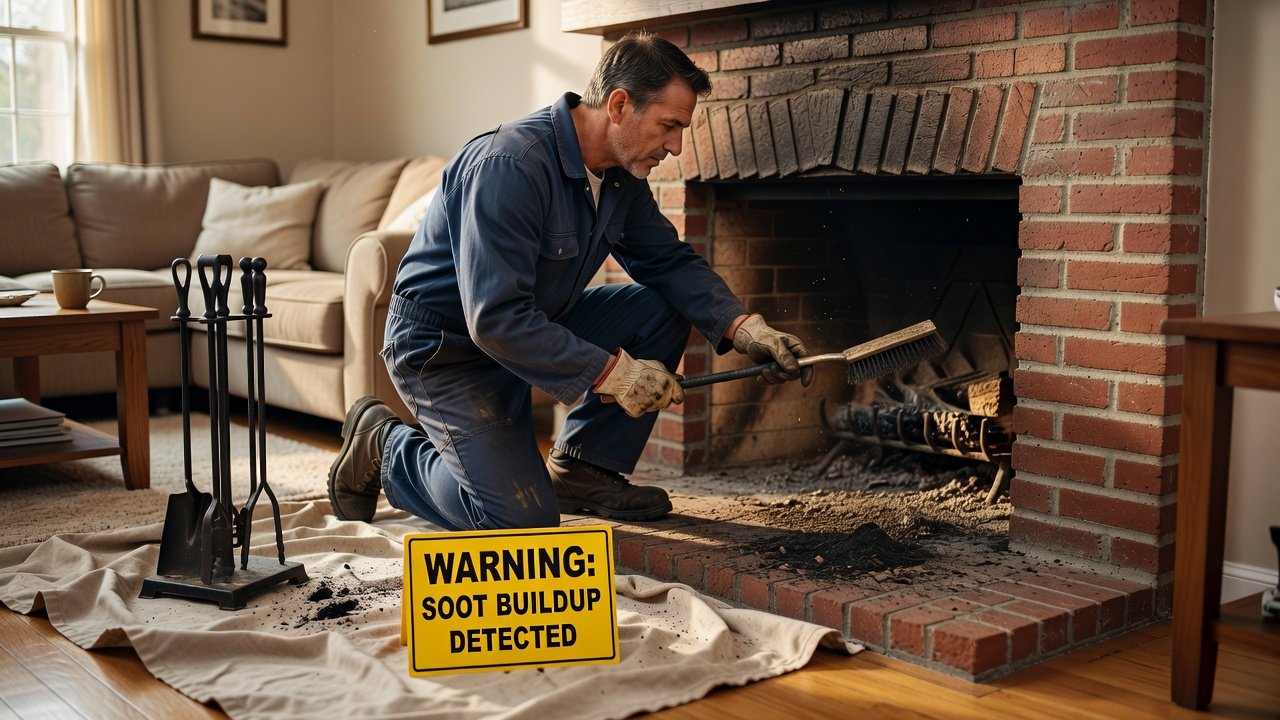
What it may mean: Black residue can be soot or creosote. Sticky, tar-like, or shiny deposits may indicate a more difficult form of creosote that needs specialized removal.
Creosote is combustible, and sufficient accumulation can contribute to a chimney fire. Its appearance can help a technician assess the type of deposit, but appearance alone does not establish an exact ignition temperature or the condition of the liner.
What to do: Do not try to burn off the deposits with a hotter fire or rely on a household cleaning product to remove them. Arrange a professional inspection and cleaning before using the fireplace again if substantial or glazed deposits are present.
3. White or Gray Staining on the Exterior Chimney
What it may mean: Chalky white staining can be efflorescence, a mineral deposit left when moisture moves through masonry. It may indicate water movement through brick or mortar, although the staining alone does not establish the source or severity of the problem.
Moisture can contribute to deteriorating mortar, damaged masonry, and other chimney problems over time. Freeze-thaw cycles can worsen existing damage when water enters masonry and freezes.
What to do: Have persistent staining, crumbling mortar, or visible cracks evaluated by a qualified professional. If you also notice water entering the home, loose masonry, or other signs of structural deterioration, arrange an assessment promptly rather than waiting for the next heating season.
4. Rust on the Damper or Other Metal Components
What it may mean: Rust can indicate exposure to moisture or condensation. Depending on its location and severity, it may affect the damper or other metal components.
Rust does not automatically mean that the liner is damaged, but it can be a reason to investigate moisture intrusion or a malfunctioning component. A damper that does not open or close properly may also interfere with safe fireplace operation.
What to do: Ask a chimney professional to inspect the affected component and check for possible moisture sources. Do not assume that cleaning alone will correct a damaged or malfunctioning damper.
5. Pieces of Tile or Unusual Debris in the Firebox
What it may mean: Fragments of clay tile, masonry, or other chimney material can indicate deterioration or damage. Loose debris may also come from another part of the chimney, so its source needs to be identified.
A damaged flue liner can compromise the chimney’s ability to contain and vent combustion products safely. Carbon monoxide is an odorless gas, and a defective or obstructed venting system can allow dangerous combustion gases to enter the home.
What to do: Stop using the fireplace and arrange a professional evaluation before lighting another fire. If you suspect carbon monoxide exposure or a carbon monoxide alarm sounds, leave the home and contact emergency services.
6. Smoke Enters the Room Instead of Rising Up the Chimney
What it may mean: Smoke entering the room may result from a blocked flue, a closed or malfunctioning damper, inadequate air supply, or a draft problem. Creosote buildup can contribute to restricted airflow, but it is not the only possible cause.
A bird’s nest, leaves, or other debris can obstruct the flue. Changes in ventilation or indoor air pressure can also affect how the chimney draws.
What to do: Stop adding fuel and do not continue using a fireplace that repeatedly sends smoke into the room. If smoke is heavy or there is an immediate danger, move everyone outside and contact emergency services. Have the chimney and ventilation conditions evaluated before using it again.
7. Loud Crackling, Popping, or Rumbling Sounds Inside the Chimney
What it may mean: Loud cracking, popping, a rumbling sound, dense smoke, or an intense hot smell during a fire can indicate a chimney fire. Not every sound from a burning fire means a chimney fire is occurring, but unusual or intense sounds inside the flue should be taken seriously.
Chimney fires can damage flue tiles, mortar joints, metal components, and nearby combustible building materials. Some chimney fires are not dramatic and may leave damage that becomes apparent only during a later inspection.
What to do: If you suspect a chimney fire, get everyone out of the home and call 911. Do not attempt to inspect the chimney yourself or use the fireplace again until it has been evaluated by a qualified chimney professional. Even if the fire appears to have stopped, hidden damage may remain.
8. Poor Draft or a Fire That Behaves Differently Than Usual
What it may mean: A fire that struggles to establish itself, burns differently than expected, or sends smoke into the room may indicate a draft or ventilation problem. Possible causes include a blockage, damper problems, insufficient air supply, or creosote buildup.
Poor draft alone does not prove that the chimney needs cleaning. The cause should be identified before deciding which service or repair is needed.
What to do: If the fireplace is behaving unusually, stop using it until the cause has been assessed. A qualified technician can check for deposits, obstructions, damper problems, and other conditions affecting performance.
What Baldwin Homeowners Should Know About DIY Chimney Cleaning
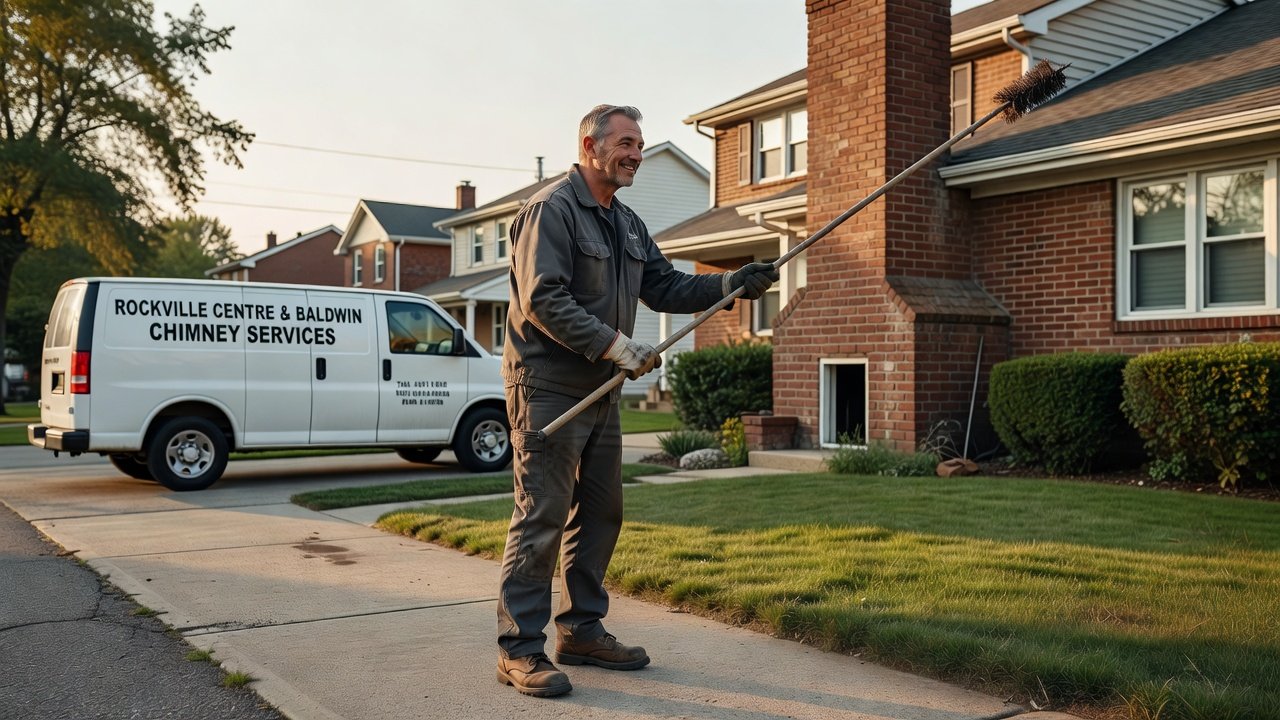
A chimney brush can remove certain deposits, but brushing alone does not establish that the entire chimney is clean or structurally sound. A professional inspection also evaluates accessible components for signs of damage, obstructions, and other conditions that may affect safe operation.
The appropriate cleaning method depends on the deposits present. Ordinary brushing may work for soot and some creosote deposits, while hardened or glazed deposits can require specialized professional methods. Chemical cleaning products should not be used as a substitute for proper mechanical cleaning and inspection.
Another common mistake is assuming that a fireplace used only occasionally does not need an inspection. Even a chimney that sees little use can develop animal nests, debris blockages, or deterioration.
Annual inspection helps determine whether cleaning, maintenance, or repairs are necessary.
How Much Does Fireplace Cleaning Cost in Baldwin, NY?
The cost of fireplace cleaning in Baldwin depends on the type of chimney, the amount of buildup, accessibility, and the work required. A standard cleaning and inspection will generally cost less than a service involving heavy or hardened creosote deposits, additional inspection work, or repairs.
Before scheduling, ask for a written estimate that explains:
-
Whether the quote includes a chimney inspection and cleaning.
-
Whether the flue and smoke chamber are included in the cleaning.
-
Whether a video inspection is recommended and what it costs.
-
Whether special removal methods or repairs would be charged separately.
-
Whether the company provides a written report of its findings.
Do not assume that a camera inspection is automatically included in every routine cleaning. A Level 2 inspection includes a more detailed examination and video scanning of the flue when feasible, and it is appropriate in specific circumstances, such as after a chimney fire or certain changes to the system.
Compare the scope of work rather than the advertised price alone. A written estimate helps you understand what you are paying for and which additional services may be necessary.
When Should You Stop Using Your Fireplace?
Some warning signs call for a routine appointment, while others require immediate action.
-
Possible chimney fire: Loud, intense popping or rumbling, dense smoke, flames from the chimney, or an intense hot smell. Get everyone outside and call 911.
-
Potential structural damage: Pieces of flue tile or masonry in the firebox, significant visible damage, or evidence of a previous chimney fire. Stop using the fireplace until it has been professionally evaluated.
-
Persistent operating problems: Smoke entering the room, recurring odors, or unusual draft. Stop use until the cause has been assessed.
-
Maintenance concerns: Creosote deposits, exterior staining, or rust without signs of immediate danger. Arrange an inspection to determine whether cleaning or repairs are needed.
When in doubt, do not light another fire until the cause of a potentially dangerous condition has been identified.
Schedule Fireplace Cleaning in Baldwin Before the Next Fire
Homeowners in Baldwin, Freeport, Merrick, Rockville Centre, and nearby Nassau County communities can benefit from regular chimney inspections and cleaning when necessary. Addressing buildup, blockages, and visible damage early can help prevent small maintenance concerns from becoming more serious problems.
If your fireplace has not been inspected in the past year, or if you have noticed an unusual odor, poor draft, or debris in the firebox, contact a qualified chimney professional. Ask what the inspection includes, whether cleaning is necessary, and whether any recommended repairs can be documented in writing.
Before publishing a company-specific call to action, confirm the provider’s service area, current CSIA certification, and whether it actually offers a free inspection or estimate. A professional assessment can identify concerns, but no inspection should be advertised as a guarantee that a chimney is completely free of risk.
Related from Baldwin Chimney: Chimney Repair in Baldwin, NY — Local Experts Who Know What Baldwin Ho · Chimney Sweep Services in Baldwin, NY · Creosote Removal in Baldwin, NY Before One Cold Night Becomes a Crisis
Our services
Professional Chimney Repair in Baldwin, NY · Chimney Cap Replacement, Liners & Dampers in Baldwin, NY · Chimney Repair in Freeport · Creosote Removal in Baldwin, NY Before One Cold Night Bec… · Chimney Cleaning in Baldwin, NY
Areas we serve
Baldwin, NY · Dryer Vent Cleaning Baldwin, NY · Baldwin, NY · All areas →