What Chimney Cap Installation Actually Costs in Baldwin and Freeport, NY
Most homeowners in Baldwin and Freeport do not think about their chimney cap until water appears in the firebox or they hear something moving inside the flue. By then, a simple cap installation can become a larger repair. A new chimney cap typically costs between $150 and $600 installed for a single-flue residential chimney on Long Island. Multi-flue systems, custom caps, difficult roof access, and crown repairs can push the cost higher.
Understanding what affects the price can help homeowners avoid two common mistakes: overpaying for a basic installation or choosing a low-cost option that does not properly protect the chimney.
Why Chimney Caps Matter in Baldwin and Freeport
Homes along the South Shore of Nassau County deal with moisture, coastal weather, wind, and seasonal storms. An open or poorly protected flue can allow rain, leaves, and animals to enter the chimney.
Water intrusion can eventually contribute to deteriorating mortar, damaged masonry, and problems with older clay tile liners. A properly installed chimney cap helps keep moisture and debris out while allowing combustion gases to escape safely.
Older homes in areas of Baldwin and Freeport may also have chimney systems that have gone years without a cap replacement or inspection. Installing a new cap can be a relatively inexpensive way to protect the chimney before a larger repair becomes necessary.
How Much Does Chimney Cap Installation Cost?
For most single-flue residential chimneys in Baldwin and Freeport, homeowners can expect to pay approximately $150 to $600 for installation.
Multi-flue chimneys or systems requiring custom-fabricated covers can cost $800 or more, depending on the materials, measurements, access, and amount of work required.
Several factors determine where your project falls within that range.
Number of Flues
A single-flue chimney is usually the simplest installation. A chimney serving multiple appliances may have two or more flues, requiring a larger cap or separate covers.
More flues mean more material, more precise measurements, and additional installation time.
Cap Material
Galvanized steel is generally the lower-cost option. It can provide adequate protection but may eventually corrode, particularly in coastal environments.
Stainless steel costs more initially but offers better resistance to corrosion. Copper is another option and is often selected when homeowners want a more decorative appearance that complements an older home.
The material you choose can make a significant difference in the final price.
Chimney Height and Roof Pitch
Access is another major factor.
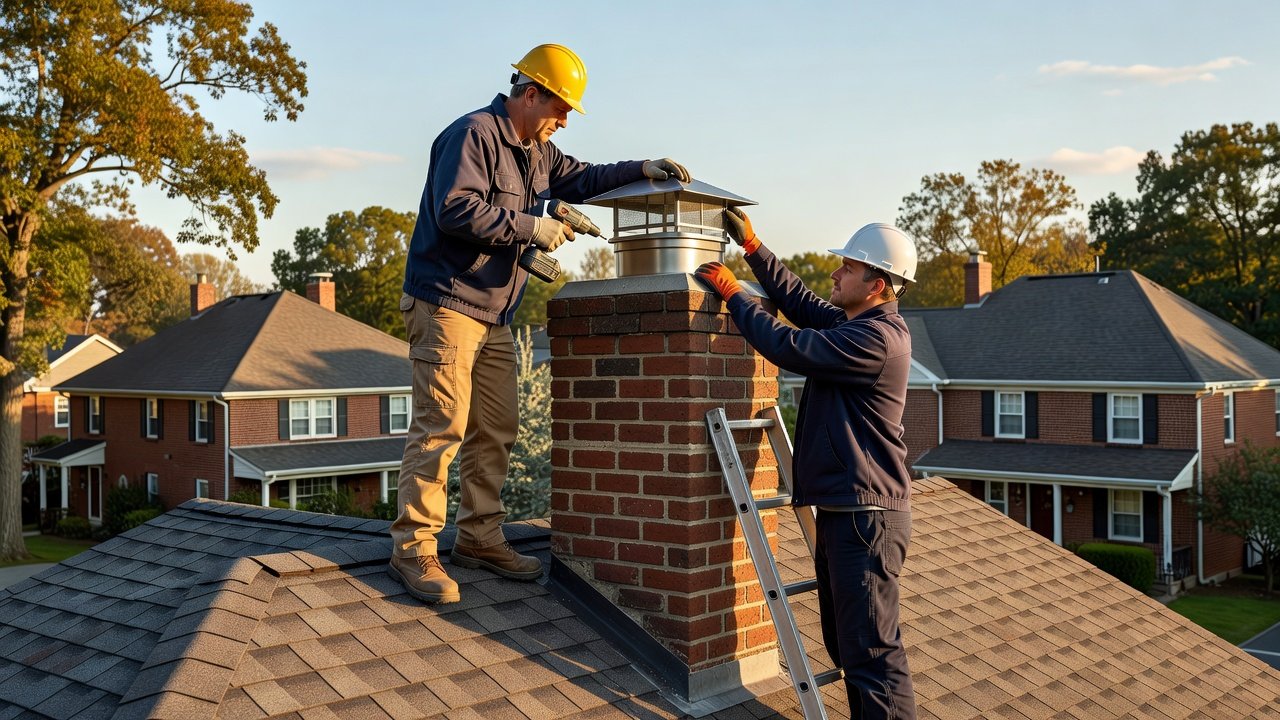
A single-story Baldwin home with a low-slope roof may provide relatively easy access. A taller Freeport home with a steep roof can require additional equipment and safety precautions.
The additional labor is legitimate because working safely at height takes more time and preparation.
Condition of the Chimney Crown
The chimney crown is the masonry or concrete structure surrounding the flue at the top of the chimney. A cap should not simply be installed over a crown that is already cracked or deteriorating.
If the crown is damaged, it may need to be repaired before the new cap is installed. Minor crown repairs can add approximately $100 to $300, depending on the extent of the damage.
Installing a new cap without addressing a failing crown can leave the underlying water problem unresolved.
Custom Sizing
Not every chimney has a standard flue opening.
Older Baldwin and Freeport homes can have unusual dimensions that require a custom-fabricated cap. Custom work takes additional measuring, fabrication, and installation time, which increases the overall cost.
Removing an Existing Cap
If an old cap is rusted, damaged, or securely fastened, removing it can add labor to the project. The technician may also need to remove corroded hardware and prepare the surface before installing the replacement.
Make sure your estimate explains whether old-cap removal is included.
What Should Be Included in the Installation?
A reasonable chimney cap installation should include the cap, appropriate hardware, installation labor, accurate measurements, and a basic visual check of the top of the chimney.
Ask what is included before agreeing to a price.
| Usually Included | Potential Add-Ons |
|---|---|
| Chimney cap | Crown repair |
| Installation hardware | Crown resurfacing |
| Installation labor | Chase cover replacement |
| Flue measurement | Chimney cleaning |
| Basic top-of-chimney check | Level 1 or Level 2 inspection |
| Cap fitting | Additional masonry repairs |
A full chimney inspection is different from a cap installation. If your chimney has not been inspected recently, ask whether an inspection can be performed during the same visit.
The Biggest Mistake Homeowners Make
The lowest estimate is not always the best value.
A homeowner may receive a $150 quote and assume they have found a great deal. But the price may reflect a lower-cost material, limited labor, or a cap that is not properly suited to the chimney.
Ask what material will be installed and whether the cap comes with a manufacturer warranty. If stainless steel is recommended, ask about the grade and warranty rather than simply accepting the word “stainless.”
A slightly higher upfront cost can make sense if it provides better durability and protection against corrosion.
When Should You Replace Your Chimney Cap?
Consider having your cap inspected if you notice:
- Rust or corrosion
- Damaged or missing mesh
- Loose or displaced sections
- Water entering the firebox
- Animal activity inside the chimney
- A missing cap
- Visible damage after a storm
- A deteriorating chimney crown
A damaged cap does not necessarily mean the entire chimney needs repair. An inspection can determine whether the problem is limited to the cap or whether water has already affected other components.
Should You Install a Chimney Cap Yourself?
Some homeowners may be able to handle a basic cap installation if they have safe roof access and the correct measurements. The greater concern is not necessarily attaching the cap. It is determining whether the chimney crown, flue, and surrounding masonry are in good condition before installation.
Roof work also creates a fall hazard. If the roof is steep, the chimney is tall, or access is difficult, hiring a professional is the safer choice.
A professional can also identify problems that may not be obvious from the ground, including crown deterioration, damaged masonry, or potential flue issues.
Get an Inspection Before You Order a New Cap
The best time to discover a damaged crown or deteriorating chimney is before you purchase and install a new cap.
A professional inspection can determine the condition of the crown, flue opening, existing cap, and visible masonry. It also gives you a clearer idea of what the project should actually cost.
Ridgewood Chimney serves Baldwin, Freeport, Oceanside, Merrick, Lynbrook, and surrounding Nassau County communities. We offer free chimney inspections and provide clear, itemized estimates before work begins.
If your chimney cap is missing, damaged, or showing signs of corrosion, schedule an inspection before the next storm turns a small repair into a larger one.
Related from Baldwin Chimney: Professional Chimney Repair in Baldwin, NY
Our services
Chimney Sweep in Baldwin Harbor · Chimney Cap Replacement, Liners & Dampers in Baldwin, NY · Chimney Repair in Freeport · Creosote Removal in Baldwin, NY Before One Cold Night Bec… · Chimney Cleaning in Baldwin, NY · Professional Chimney Repair in Baldwin, NY
Areas we serve
Dryer Vent Cleaning Baldwin, NY · Baldwin, NY · Baldwin, NY · All areas →