Chimney Inspection in Baldwin and Rockville Centre: What You Can Handle Yourself and How to Hire Someone You Can Actually Trust
A chimney can look fine from the living room while problems exist elsewhere in the system. Deposits, blockages, masonry deterioration, or flue damage may not be visible from the fireplace opening. That is why homeowners in Baldwin and Rockville Centre should understand which maintenance tasks they can safely handle and when a professional inspection is appropriate. Annual chimney inspection is recommended under the NFPA 211 framework, with cleaning, maintenance, or repairs performed when needed.
What Can a Homeowner Reasonably Check?
Homeowners can perform some basic visual checks without attempting to repair the chimney.
Start inside the fireplace. Look for obvious changes such as damaged firebrick, deteriorated mortar, unusual debris, or other visible conditions that were not present previously. You can also check whether the damper appears to open and close normally. Do not force a damper that is stuck or damaged.
From the ground, binoculars can help you look at visible portions of the chimney. You may be able to identify an obviously missing cap, damaged masonry, or other exterior changes without climbing onto the roof.
Homeowners can also handle routine fireplace housekeeping, including removing completely cooled ashes according to the appliance manufacturer’s instructions. Keeping combustible materials away from the fireplace opening is another simple safety measure.
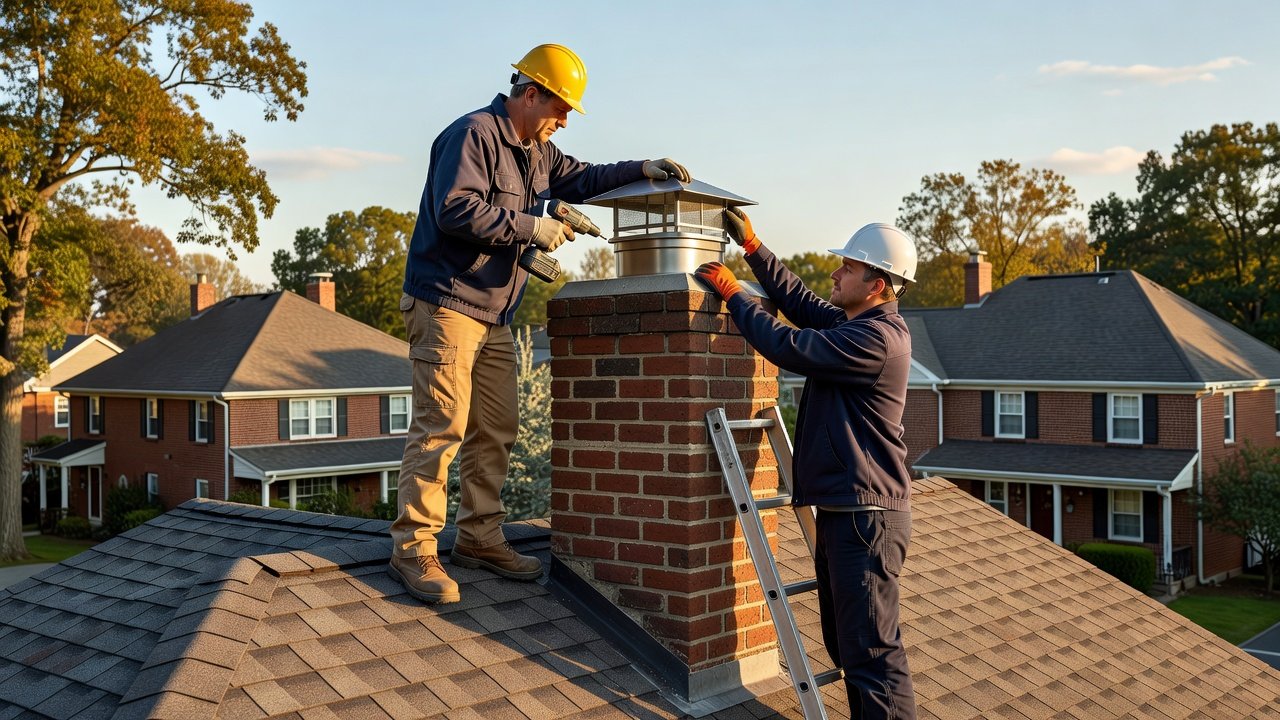
There is an important distinction, however, between looking at a component and repairing it. A homeowner may identify a missing cap from the ground, but replacing a chimney cap can require roof access and may involve flashing or other components. If the work requires climbing onto the roof or disturbing the chimney structure, hiring a professional is the safer choice.
Where the DIY Line Ends
The line becomes clearer when the work involves areas that cannot be safely accessed or evaluated from the ground or fireplace.
A homeowner should not attempt to perform a Level 2 or Level 3 inspection. These inspections have expanded scopes that require specialized equipment and professional interpretation.
A Level 2 inspection includes the Level 1 inspection plus examination of accessible areas such as attics, crawl spaces, and basements. It also includes an internal examination of the chimney using video scanning or another appropriate method.
Flue relining, liner repair, structural masonry work, crown reconstruction, flashing repairs, and damper replacement should also be evaluated by a qualified professional. These projects involve more than the visible condition of the component and may affect the chimney’s ability to safely vent combustion products.
Call a professional when you encounter:
- Suspected flue or liner damage
- Significant creosote or glazed deposits
- Falling pieces of flue tile or masonry
- Damaged or deteriorated chimney masonry
- A malfunctioning damper
- Suspected chimney-fire damage
- Persistent smoke entering the home
- A chimney configuration that cannot be adequately evaluated through a Level 1 inspection
- Work requiring roof access or structural repair
Does Every Chimney Need a Level 2 Inspection?
No. The inspection level depends on the chimney’s condition, history, and circumstances.
A Level 1 inspection is generally appropriate when the chimney system has not experienced significant changes and there are no known problems requiring a more extensive evaluation.
A Level 2 inspection has a broader scope. CSIA recommends it in circumstances including a property sale, changes to the appliance or venting system, relining work, a chimney or building fire, certain external events, or an operating malfunction likely to have caused damage. It is also appropriate when a Level 1 inspection cannot determine whether the system is serviceable.
This is more useful than assuming every chimney needs a camera inspection every year.
How to Hire a Chimney Professional in Nassau County
Credentials are one part of evaluating a chimney professional. CSIA maintains a directory where homeowners can verify current CSIA certification.
For gas fireplace or gas appliance work, homeowners should also ask whether the technician has appropriate training for the specific appliance and service being performed. NFI offers professional certification programs for fireplace and hearth professionals, including gas specialties.
Before hiring anyone, ask:
- What inspection level do you recommend?
- Why is that inspection level appropriate?
- What does the inspection include?
- Will I receive documentation of the findings?
- What happens if you discover damage?
- Will additional repairs require my approval before work begins?
- Are you currently CSIA certified?
- What insurance coverage does the company carry?
A contractor should be able to explain the scope of work clearly before beginning. If additional repairs are recommended, ask for a written description of the problem and an estimate before authorizing the work.
What About a Written Report and Photos?
Written documentation is useful because it gives the homeowner a record of what the contractor found and what work was performed.
Ask whether the company provides an inspection report and whether photographs are available when they help document a defect. Do not assume that every chimney contractor or every inspection package automatically includes photographs.
The important thing is that the homeowner understands the findings and receives enough documentation to make an informed decision about recommended work.
Be Careful With Very Low Quotes
Price alone cannot tell you whether a chimney professional is qualified.
An unusually low advertised price may represent a limited inspection or exclude cleaning, additional flues, difficult access, or other services. Ask what the quoted amount includes before scheduling.
Be cautious if a contractor recommends expensive repairs without clearly explaining the problem. Ask for documentation, photographs when appropriate, and a written estimate. For significant repairs, getting a second opinion can also be reasonable.
The same principle applies to extremely high quotes. A higher price may be justified by a more extensive inspection or difficult repair, but the contractor should be able to explain what makes the work more involved.
What Homeowners Should Know About Roof Work
Chimney maintenance sometimes involves components located above the roofline. That does not mean homeowners should climb onto the roof to perform their own inspection or repairs.
A professional can safely evaluate the chimney cap, crown, flashing, masonry, and other exterior components when roof access is necessary.
This is particularly important when a suspected problem involves flashing or the junction between the chimney and roof. Those areas can be difficult to evaluate safely without appropriate equipment and experience.
When Should Baldwin and Rockville Centre Homeowners Schedule an Inspection?
The most important timing rule is consistency. CSIA recommends annual inspection, while cleaning, maintenance, and repairs are performed when the condition of the system requires them.
Scheduling before regular fireplace use can give homeowners more time to address problems that are discovered. However, you do not need to wait for a particular month if the chimney has not been inspected within the recommended interval or if you notice a potential problem.
If smoke enters the home, pieces of chimney material fall into the firebox, the damper stops functioning properly, or you suspect a chimney fire, do not wait for the next annual appointment.
The Bottom Line
Homeowners in Baldwin and Rockville Centre can handle basic fireplace upkeep and visual checks from safe locations. They should stop short of roof work, flue inspection, liner repairs, structural masonry repairs, and other work that requires specialized equipment or access.
When hiring a chimney professional, verify credentials, ask what inspection level is appropriate, request a clear scope of work, and get documentation of significant findings. A professional who can explain both what is wrong and what does not need repair is often more useful than one who simply presents a long list of services.
Annual inspection, appropriate cleaning, and prompt attention to visible problems can help homeowners understand the condition of their chimney before a small issue becomes a larger one.
Related from Baldwin Chimney: Chimney Repair in Baldwin, NY — Local Experts Who Know What Baldwin Ho · Professional Chimney Repair in Baldwin, NY
Our services
Chimney Cap Replacement, Liners & Dampers in Baldwin, NY · Chimney Repair in Freeport · Creosote Removal in Baldwin, NY Before One Cold Night Bec… · Chimney Cleaning in Baldwin, NY · Professional Chimney Repair in Baldwin, NY · Chimney Sweep in Baldwin Harbor
Areas we serve
Baldwin, NY · Baldwin, NY · Dryer Vent Cleaning Baldwin, NY · All areas →