Your Chimney Is Telling You Something: Here’s How to Read It
Most Nassau County homeowners do not think about their chimney until something changes. Maybe the fireplace suddenly draws poorly. Maybe there is a smoky smell in the room. Maybe you notice cracked masonry or a damaged chimney cap from the yard.
Those signs should not be ignored.
A chimney is part of your home’s ventilation and fire-safety system. Problems involving creosote, obstructions, moisture, masonry, or damaged components can affect how safely the fireplace operates. National Fire Protection Association data shows that heating equipment is a significant source of U.S. home fires, with heating equipment fires causing an estimated $1.06 billion in direct property damage annually during 2016–2020.
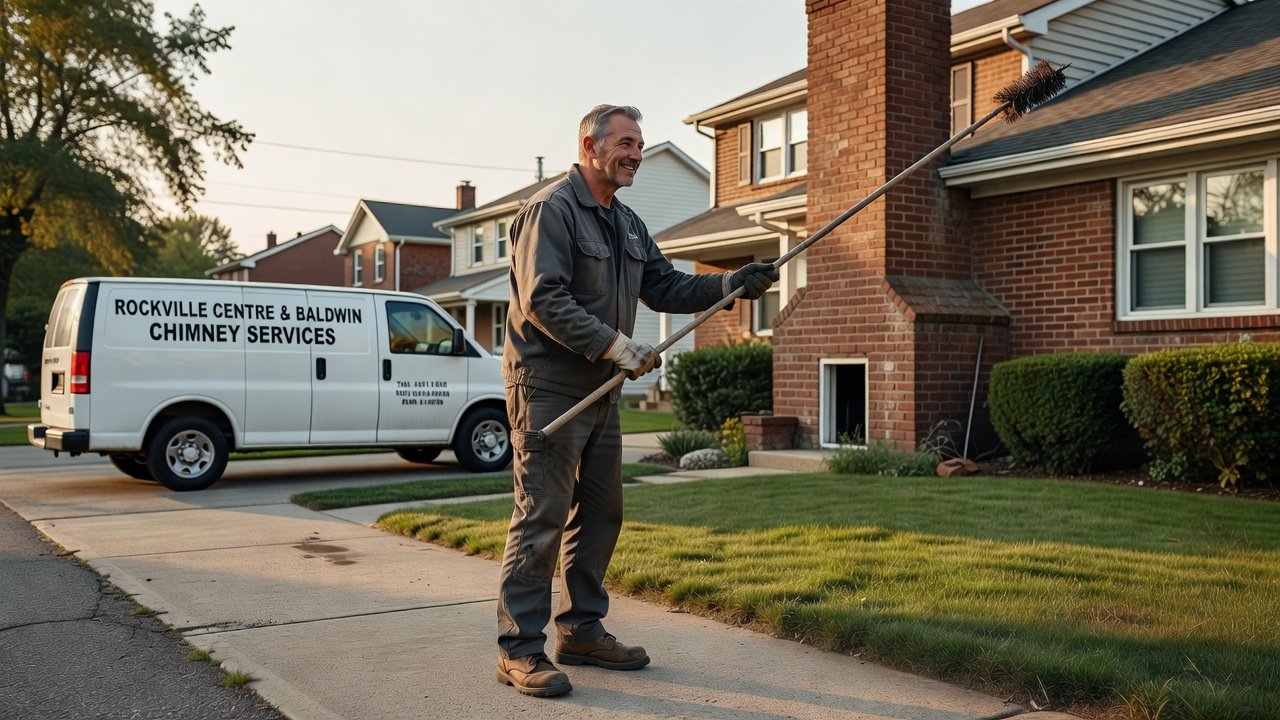
For homeowners looking for chimney cleaning in Baldwin, NY, the goal should not simply be to remove soot. A proper chimney service should also identify conditions that could affect the chimney’s ability to safely vent combustion products.
What Professional Chimney Cleaning Actually Involves
Professional chimney cleaning is more than running a brush through the flue.
The work should begin with an evaluation of the accessible portions of the fireplace and chimney system. Depending on the appliance, this can include the firebox, damper, smoke chamber, chimney interior, cap, and other accessible components.
The technician should look for conditions such as creosote accumulation, obstructions, damaged components, and visible masonry problems before determining the appropriate cleaning method.
For a wood-burning fireplace, creosote is an important concern. It forms as a byproduct of burning wood and can accumulate inside the chimney. CSIA recommends that masonry fireplaces be swept when sooty buildup reaches approximately 1/8 inch, with cleaning sooner when glaze is present. Cleaning frequency varies according to how the fireplace is used, the fuel burned, and the characteristics of the chimney system.
Standard chimney sweeping generally uses brushes along with a properly filtered vacuum to control soot and debris. Harder or glazed deposits may require specialized mechanical methods or other professional techniques.
A professional should also be careful when dealing with a damaged flue liner. Cracked or deteriorated components can require repair or further evaluation rather than simply being brushed aggressively.
After the work, ask the technician what was found, what was cleaned, and whether any repairs or additional inspection are recommended.
Warning Signs That Mean Your Chimney Needs Attention
Thick or Heavy Creosote Buildup
Dark deposits inside a wood-burning fireplace or chimney can indicate accumulated soot or creosote.
Creosote can exist in different forms, from loose deposits to harder or glazed material. Its appearance alone is not enough to determine exactly how hazardous a chimney is.
If you see substantial buildup, schedule an inspection and cleaning rather than continuing to use the fireplace without professional evaluation.
A Strong Smoky or Tar-Like Odor
A persistent chimney odor can have several possible causes.
Creosote deposits can contribute to chimney odors, particularly when moisture or changes in air pressure affect the system. Odors can also be associated with other chimney conditions.
An odor by itself does not prove that there is a dangerous amount of creosote. If the smell is persistent, have the chimney evaluated instead of trying to mask it.
White Staining on Exterior Masonry
White, powdery deposits on brick or masonry are commonly known as efflorescence.
Efflorescence can indicate that moisture is moving through masonry and carrying dissolved minerals toward the surface. It does not automatically mean that the chimney has serious structural damage, but recurring moisture problems deserve attention.
A chimney professional can look at the masonry, crown or cap, flashing, and other areas that may allow water to enter the system.
Smoke Entering the Room
Smoke should travel up the chimney rather than into the living area.
If smoke begins entering the room when you light a fire, stop using the fireplace until the cause is identified. Possible causes include an obstruction, damper problem, inadequate draft, or another issue affecting the venting system.
CSIA identifies obstructions such as animal nests as one reason annual chimney inspections are important.
Rust on the Damper or Other Components
Rust can be a sign that moisture is reaching metal components.
A damaged or heavily corroded damper can affect fireplace operation. Moisture can also contribute to deterioration elsewhere in the chimney system.
Rust does not automatically mean the chimney cap has failed, but it is a reason to have the system evaluated.
Cracked or Spalling Brick
Look at the chimney from the ground occasionally.
Cracked bricks, deteriorating mortar, spalling surfaces, or other visible masonry damage can indicate that the chimney needs repair.
Masonry problems should not be ignored because deterioration can progress over time. A professional can determine whether the issue involves localized mortar repair, brick replacement, water management, or a more extensive repair.
A Missing or Damaged Chimney Cap
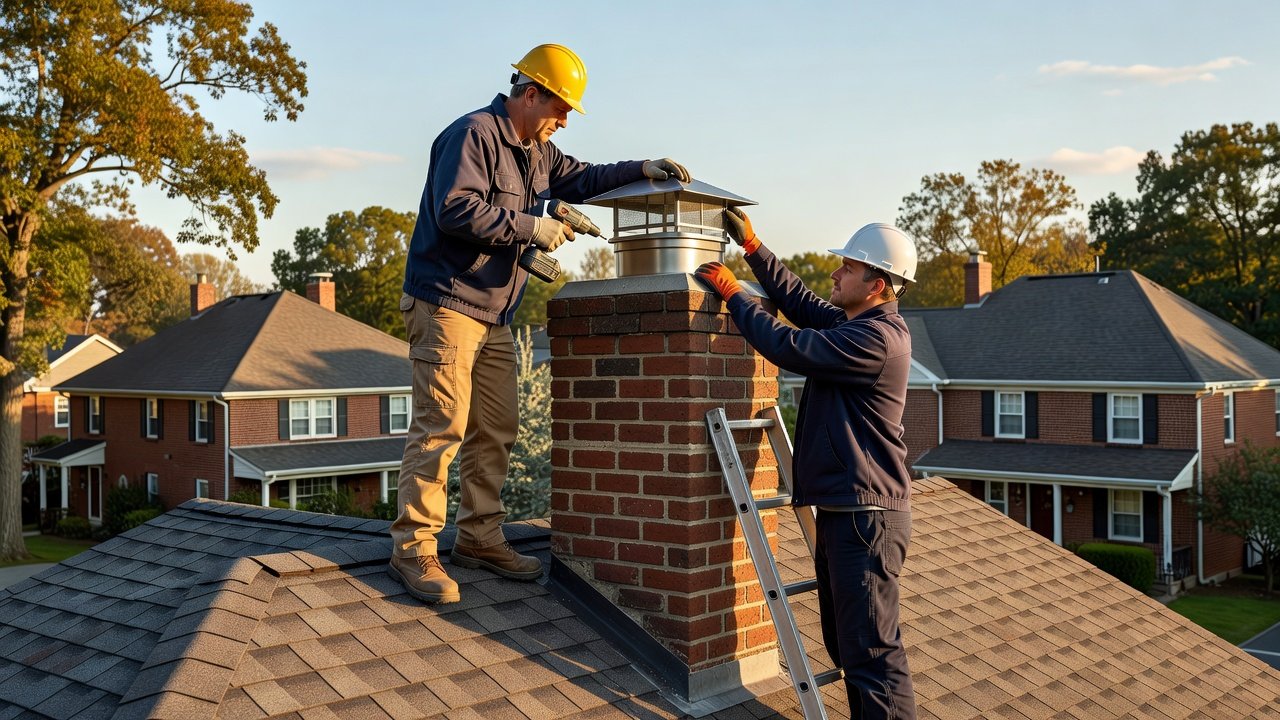
A chimney cap helps keep rain, debris, and animals from entering the chimney.
A missing, damaged, or improperly fitted cap can leave the chimney vulnerable to moisture and obstructions. Animal nesting materials can also interfere with proper venting.
If the cap is damaged or missing, have it evaluated before using the fireplace.
Black Staining or Signs of Smoke Escape
Dark staining around the fireplace or chimney can have several possible causes.
If you see evidence that smoke or combustion products may be escaping through masonry joints or other parts of the system, stop using the fireplace and arrange for a professional inspection.
Carbon monoxide cannot be seen or smelled, so homeowners should also maintain working carbon monoxide alarms in appropriate areas of the home.
Why Annual Chimney Inspections Matter
Homeowners sometimes assume that a chimney only needs attention when they use the fireplace frequently.
That is not necessarily the case.
CSIA follows NFPA 211 guidance recommending that chimneys, fireplaces, and vents be inspected at least once a year for soundness, deposits, and proper clearances. Cleaning, maintenance, and repairs should be performed when necessary.
Annual inspection is different from automatic annual cleaning.
Some chimneys may require cleaning more frequently because of how they are used. Others may not need to be cleaned every year. The appropriate schedule depends on the appliance, fuel, amount of use, burning practices, and condition of the chimney.
Even a fireplace that has not been used recently can develop problems. Animals can enter an unprotected chimney, masonry can deteriorate, and moisture can damage components.
Baldwin Homeowners Should Watch for Moisture Damage
Chimneys are exposed to rain, snow, temperature changes, and other outdoor conditions throughout the year.
That makes water management an important part of chimney maintenance.
Look for:
- White mineral staining
- Cracked mortar
- Spalling brick
- Damaged chimney caps
- Deteriorated crowns
- Rusted metal components
- Water staining around the fireplace
- Damaged flashing
Not every visible problem requires an emergency repair. However, catching moisture-related deterioration early can help prevent a small maintenance issue from becoming a larger repair.
What Happens During a Chimney Inspection?
The appropriate inspection level depends on the circumstances.
A Level 1 inspection is generally used when the chimney system’s basic configuration and conditions have not changed and the accessible portions can be adequately examined.
A more extensive inspection may be appropriate when there has been a change in the appliance or fuel, a suspected chimney problem, or other circumstances that require a broader evaluation.
Your chimney professional should explain what inspection level is appropriate and why.
A good inspection should not simply result in a vague statement that your chimney is “fine.” Ask what was examined and whether any conditions require attention.
When Should You Stop Using the Fireplace?
Some warning signs justify stopping fireplace use until the problem is evaluated.
Stop using the fireplace and arrange for professional evaluation if:
- Smoke is entering the living space.
- You suspect a chimney obstruction.
- You see significant creosote buildup.
- You notice damaged or collapsed flue components.
- You see evidence of smoke escaping through chimney masonry.
- You suspect that a chimney fire has occurred.
- You see significant structural deterioration.
If a chimney fire is suspected, do not simply resume using the fireplace after the flames disappear. The chimney should be professionally evaluated for damage.
Schedule Chimney Cleaning in Baldwin, NY
Your chimney does not always announce a problem with a dramatic event.
Sometimes the warning is a smell. Sometimes it is a little smoke coming into the room. Sometimes it is cracked masonry, rust, staining, or a damaged cap.
Those signs are worth investigating before a small maintenance problem becomes a larger safety or repair issue.
Ridgewood Chimney serves Baldwin and surrounding Nassau County communities with chimney inspection, cleaning, and repair services.
If your fireplace has not been inspected recently, contact Ridgewood Chimney to discuss the condition of your chimney and determine whether cleaning or additional service is appropriate.
The best time to discover a chimney problem is before you need the fireplace.
Areas we serve
Baldwin, NY · Baldwin, NY · Dryer Vent Cleaning Baldwin, NY · All areas →